Wednesday, June 2, 2010

F.E.A.R. 2 Review


The first FEAR was critically praised for its marriage of intense firefights, ferocious AI, and creepy atmosphere. Shortly after the original game released, there was a big stir as the IP was torn between the developer and the publisher, leading to two forgettable expansions (Perseus Mandate and Extraction Point) developed by another studio since the publisher had owned the name. During all of this chaos, Monolith began work on a game known as Project Origin, and as more information became available, it was fairly apparent that this would be the true successor to the F.E.A.R. name, just possibly without that title stuck to it. Things started to fall into place for Monolith however, primarily that they earned the right to use the series name and were signed back with Warner Bros. Does F.E.A.R. 2 manage to make up for those horrendous expansions? Read on to find out!


Gameplay - 7/10

FEAR 2 doesn't really do much to differentiate it from the original game when it comes to gameplay, which is a good and bad thing. While this means that the incredible AI has made a triumphant return, it also means that the game is going to rely a lot on the same scare tactics as the original. Stumbling down hallways and looking for a door in dimly lit areas while lights flicker overhead might scare the bejesus out of you once, but by the end of the game, you'll be more surprised when it doesn't happen. In order to break up the tedium of walking through cramped areas, the developer integrated outdoor areas and a giant mech every now and then that you can pilot, effectively turning your once vulnerable hero into a clone-slaying war machine. It's a bit jarring at first, but I actually appreciated the change after a while. Many games lose their tension when you gain a super weapon like this, But FEAR 2 keeps these sections brief, keeping it from turning into some sort of Dynasty Warriors slaughterfest. The last minor, yet incredibly annoying thing that needs to be mentioned is that there are no options to customize the control scheme from what I noticed. This means that all of the crazy melee moves are rendered somewhat useless on the PS3 version of FEAR 2 because of how awkward it is to have to press in the analog sticks, jump, and tap the melee button all at once for whatever move you're trying to execute.


Graphics - 7/10

As previously mentioned, this game still relies heavily on dimly lit environments and a clone army. On the bright side, the dimly lit environments are no longer just once office complex consisting of brown corridors. Instead, you stumble through some fairly eerie locations that all look slightly different from each other when you can actually see what's going on. While the change in color is greatly appreciated, something about the actual models looks a bit dated and you ultimately still spend a lot of time wandering down halls. Enemy designs, while effective, never really struck me as anything creative. When you consider that most of the things you face are just clones, you'll love it when the game introduces more enemy types until you realize that, yes, it's just 10 or so different types of enemies that all look exactly the same. At least the action keeps moving at a steady framerate the whole time!

Sound - 7/10

I've always appreciated it when a game nails weapon sound effects. This is the one area that FEAR 2 succeeds in incredibly well. Fitting in the the tense action sequences and creeping through hallways comes some great environmental sounds, from leaky pipes to rattling cans. The enemy voice overs in battle, although basic, still mange to add to the gameplay experience, especially when you come around a corner and hear "Flashlight over there, get in position!" and are able to get a somewhat accurate count for how many enemies you're about to face based on their footsteps in the next room. While these sounds are amazing, the voiceovers for plot points are questionable at best. I'm still unsure what kind of story they were trying to create, which is why this score is so low, but when you hear characters comparing you to pizza or making fun of other characters for being secretive, you want to let out a laugh, but it's kind of awkward in a game that made a name for itself by being a scary action game.


Overall - 7/10

FEAR 2 is one of those games, like Wolfenstein, that you could go your entire life without ever playing and might not be missing much, but if you're bored and just want something a little bit different and on the cheap side (now), it's worth a play through. If you're thinking of picking this up for the multiplayer component, you might want to pass since it's incredibly hard to find a game now, and when you do, it's just Deathmatch or Team Deathmatch. If you loved the first game, or are a fan of shooters/horror games, I'd advise picking up FEAR 2, but for everyone else, I'd say check out the demo first.

Saturday, May 29, 2010

Wolfenstein Review


You ask any gamer what the first FPS was, you generally get the same answer: Doom. Sorry, brah. Wolfenstein 3D was id Softwares first game, which essentially put them on the map and allowed for Doom to be developed. The original Wolfenstein 3D laid forth the formula for the series that continues all the way up into 2009's Wolfenstein, boiling down to a bunch of Nazis that gain control of a relic that empowers them with some sort of super powers, which is ultimately taken down by B.J. Blazkowicz. How does it measure up, all these years later? Is it still fun to take down super nazis? Read on to find out.


Gameplay - 7/10

While all the previous games in this series took an incredibly linear format, this most recent release goes for a much more open hub world system. Although it's a refreshing change to the stage-to-stage format every other first person shooter goes through, ultimately it ends up with you running to an area on a map, getting a mission, then going there anyway. It's a nice alteration, but ultimately doesn't make any real difference to how you'll be going through the game. Another change I feel was made to be console friendly that probably isn't present in the PC version is that when you go into the menu to switch weapons, you set it so you can switch between your two favorite weapons, but if you want to pick a completely different one, you're going to be staring at what is essentially an equipment menu, which takes you out of the game a bit. All of these are minor issues, and I'm sure we're all wondering how this games nazi blasting formula deviates from World at War or the previous Wolfenstein games. Thanks to the fact that you're traveling through a much more believe war-torn Europe, there are tons of things in the environment that are entirely appropriate to use for cover.
These elements hold up well for the standard soldiers you come across, but it's the supernatural forces that might make you want to eat your controller a few times. After a certain point, you start coming across the trademark sexy female ninja nazis, cloaked enemies, and a lot of other things that you've got to see to believe, including one of the most frustrating end bosses I've seen in a game in years (excluding Killzone 2). While there is a multiplayer component in the game, I was unable to find anyone playing online when I tried it out, which was probably in March or April 2010, so I can't say how enjoyable that is. The last thing that needs to be mentioned is how insane the weapons get towards the end of the game. Other games settle for giving you a badass rocket launcher. Wolfenstein? Sure, feel free to take this hand-held Tesla Cannon.


Graphics - 8/10

While I was going through this game, I was wondering why some other games don't have the attention to detail in the textures that this has, specifically God of War 3. A lot of games give you decent texture work when you're playing the game, but under closer examination, such as when there are lulls in the action, it's hard not to notice blurry textures. Another thing that surprised me, considering that I'm sure a lot of people skipped this title, was how imaginative a lot of the models and environments become, especially in enemy design towards the latter half of the game. Early on, you'll be facing hordes of generic soldiers, but as the adventure progresses, you start seeing some of the things that seem like they could only come from the minds at id and Raven.

Sound - 6/10

Most of the time, you're going to be hearing the same gunshots you hear everywhere else. The voice acting is nice, although some characters feel like they might be overdoing the foreigner-attempting-to-speak-english dialect, but it's functional and probably won't bother you that bad unless you pay special attention to it. Although they're nothing new, the explosions tend to create a real sense of tension, as well as that familiar tinkling sound of a grenade rolling slightly too close. Let's also not forget how satisfying it is to come across a horde of enemies, ignite them, and hear/see them screaming in agony. It's a bit demented, but it feels like that sound is one of the hardest for any voice actor to portray right, and its more than adequate in Wolfenstein.


Overall - 7/10

Part of me wants to score this higher just to encourage people to give it a chance, but another part says that there are probably better things to spend the cash on. The sci-fi nazi twist is a nice change up from fighting terrorists in a first person shooter, not to mention how awesome it is to be using fictional weapons again instead of the standard pistol/sniper rifles that fill so many other games (don't worry, those are included in this too). The story isn't exactly full of unpredictable plot twists or anything, but it's nice to pick up a game for once and have an idea of exactly how it's going to start and how it's going to end. Out of all the overlooked shooters from 2009, this stands out as one I encourage everyone to try, especially if you can find it for 30$ and under or possibly a weekend rental.

Friday, May 28, 2010

Skate 3 Review


Skate 3 is the sequel that Skate 2 should have been. That's not to say that Skate 2 was bad or inferior to Skate, but there are a lot of additions that I'm looking at in this game that feel like they should have made it into the second game, but possibly didn't do to time constraints. All of that aside, the third game in this series worked its way into retailers on May 11th, bringing with it a hosts of improvements and alterations to the tried and true formula. Read on to find out how well the overall package came together.


Gameplay 8/10

With the original game, the skateboarding game genre was forever transformed, as evident by the number of sales against its rival that year, Tony Hawks Proving Grounds. In addition to that, the realistic gameplay, creative control scheme, and size of the open world was met with tons of critical acclaim and cemented the namesake into the hearts of gamers everywhere. The sequel improved on this formula by setting the game in the same city after a major disaster occurs, which alters the landscape a bit, giving you tons of new areas to skate, pros to meet, and an even more in depth replay and photo editor. This, coupled with more open areas of online freeskate, not to mention the addition of walking, made this sequel more than deserving as its title of successor.
Now, here we are with Skate 3, which in every way feels like the game Skate 2 would have developed into had there been more time between releases. Major changes to the game include the fact that now every single player challenge can be played online in co-op, meaning any thing you're having issues with is made a lot more tolerable by possibly bringing someone else in that is better than you or functions better than your new AI teammates. While Skate 2 had the option to drag items around and set up your own unique spots, Skate 3 allows you to use an object dropper anywhere in the world, not to mention an extensive park editor that allows for in depth customization of every single rail, ledge, ramp, or even elevation change on your own park, which can be shared with other people online (provided you buy the game new!). The fact that the entire game is entire co-op has its weaknesses, primarily coming from the team challenges that feel like its necessary for someone else to be doing with you instead of relying on the AI provided, which might be a deal-breaker for some.

Graphics - 8/10

For the first time, the game is running at a steady 60 FPS throughout the entire city. While the graphical style looks similar to Skate 2's, the fact that everything is consistent the whole way through makes a huge change in how fluid the game moves. The camera work this time around gives you a much more clean view of the world, since the series ditched that dirty looking filter and fisheye effect from the previous games, but if you desire to have them back, you can turn them on in the options, at the sake of reducing the framerate. Another huge change in the graphics is the fact that now, if you fail at doing a trick, instead of going into an automatic bail animation, there's a possibility that your skater will stumble and attempt to regain balance, which looks exactly like you'd expect it to if you've ever been the victim of this or witnessed in real life. Not only does it serve to immerse you in the sim like experience, but it helps from a gameplay perspective, as this makes it a lot easier to recover your momentum than faceplanting into the cement.


Sound - 8/10

While the previous games offered samples of other genres, it feels like Skate 3's soundtrack offers more of whatever it is that you're looking for. I can't name another game off the top of my head that can take you from Young Jeezy to Neil Diamond, then back over to The Pixies or Joy Division all within the course of 10 minutes. If there's anything in the soundtrack you don't want to hear, you can go into the menu and disable it. The PS3 version implements custom soundtracks right off the disk, meaning you don't have to wait for a patch to skate to that Rod Stewart cd you've secretly hoarded on your hard drive. For anyone that had been annoyed with the cameraman in the previous games, he's gone now and replaced with a new guy that rarely ever says anything unless you come across a really awesome spot, have an incredibly harsh bail, or pull off an insane trick. The score only gets an 8 here mostly because the sound effects from the actual skateboard just don't sound as satisfying as they did in earlier games. Maybe it's just me, but everything sounds a lot more muted now.


Overall - 8/10

While I can easily say Skate 3 is a much more refined game than Skate 2 was, it's a bit harder to recommend if you're not able to play online, and you should also be aware that if you buy it used, it disables your ability to share parks, logos, and pictures online. If you've never played a Skate game in your life before, however, the addition of difficulties, variety of landscapes, and refinements to the overall gameplay mechanics makes this easily a welcome starting area, probably even more than the first two games! The last thing I feel needs to be mentioned is that as of May 28th, 2010, it's been increasingly hard to find games online, especially considering a lot of players are probably on one of the other games that's come out this month. I'm hoping the community returns maybe during the post-E3 pre-fall down time, but I'm no psychic and this makes it a lot harder to get the full enjoyment out of the game due to the increased attention to online play.

Tuesday, May 11, 2010

After Burner Climax review


Remember the days when games were based around a core mechanic and lived or died by said mechanic? During that period of time, Sega birthed an arcade flight action game under the name After Burner. While the original did fairly good, when most people think of After Burner, the memories are almost always associated with the second game; holding the flight stick in the arcade while shooting down countless enemy planes at insane speed. While there was an After Burner 3, the series hadn't seen a sequel since the 90's, but all of that changed in 2006 with the arcade release of After Burner Climax. The game succeeds in catching the attention and quarters of many in the arcade, thanks to it's blistering speeds and somewhat familiar gameplay with a few new tweaks, but is it worth the price of admission to play at home?

Gameplay - 8/10

Just like Outrun Online Arcade, ABC succeeds in taking one solid mechanic and making an incredible game out of it. The default control scheme might take a while to get adjusted to, but its well worth the dedication. If it's still not clicking for you, there's a few custom control schemes that you can select from as well, which are great, but it's a bummer that you can't fully customize the layout. Once you've got that out of the way, you select your plane and take to the skies. For those hoping for a free roam flight game akin to Ace Combat, you'll quickly realize that Climax sticks to its roots and forces you to constantly move forward, allowing you to use the throttle to accelerate or decelerate, which becomes vital in dodging shots and evading enemies behind you. Although the game is constantly hurtling you in one direction, you're free to move in a fairly large area using the left stick, all while using your machine gun to take down nearby enemies or locking onto them with your missiles before letting them go. The last thing in the controls department is the inclusion of the climax mode, where everything slows down, allowing you to lock on to tons of targets at once while making some dodges that would otherwise have been incredibly tricky, then firing off a volley of missiles, taking down all of the selected targets almost instantaneously. Unfortunately, that's about as far as the game goes in terms of controls.
Due to the unrelenting forward movement, the game also normally only takes between 8-12 minutes to finish, which would be a huge problem if this was an epic first person shooter or something, but despite its simple controls and short total gameplay time, chances are that you won't be making it to the end in your first few playthroughs (JUST LIKE IN OUTRUN!), since you're initially only given 3 credits to work with. In spite of what I said about the simple controls earlier, there's a surprisingly deep combo-chaining system present here that rewards you for continuously stringing together kills before a timer runs out, meaning that you occasionally need to leave one or two stragglers if you want to continue chaining between waves of enemies. After each mission, you're ranked on how well you did, along with getting letter grades after every 4 stages or so, which usually give you a chance to take a branching path to reach the ending.


Graphics - 7/10

When you first fire it up, you'll realize how incredibly well this looks for not only a downloadable game, but also as a next-gen game. All of this will be made more amazing once you realize the game was released in arcades back in 2006! As you blaze through the games levels, the variety of environments will continue to impress you, constantly making you wonder what the next level looks like or what the other path might lead to. The planes featured in the game all sport a surprising amount of detail and the explosions all look incredibly satisfying. The more you play, especially if you go for that achievement that requires you to finish the game with a D or E rank in speed (protip: hold the brake the whole game), you'll start realizing that under closer examination, the textures only look detailed if you're playing the game right (blazing through or just slowing down long enough to dodge enemy fire). This also brings to light that some of the effects are kind of...not as detailed as they look when you're going through faster, most notably the planes emerging from beneath the clouds, but as long as you keep your speed up, none of this will be an issue at all.

Sound - 6/10

ABC's biggest weakness is it's lackluster soundtrack. While I give Sega props for including the ability to use the Afterburner 2 soundtrack in the game, it still doesn't excuse how forgettable the soundtrack in this game is. It's appropriate considering this is an arcade flight combat game, but there's definitely not any jingles that are going to be left in your head or most likely songs that you really want to hear when you're not playing the game. The game does get an extra point for having some incredibly funny dialogue going on in the background, and I don't think that it's intentionally humorous, but it's almost campy for an arcade game "WOO! I MADE IT HERE FIRST!" There's just something really charming about the banter you hear between the pilots or the lack of concern in their voices as they take down an imaginary country's entire air force.


Overall - 7/10

After Burner Climax is highly recommended that everyone at least tries out, because it's a throwback to when games were pure and lived or died on one mechanic, this one being its combo system. Fortunately, it gets the combo system right, along with having tons of unlockables, and then you have the leaderboards and a personal high score board as well to encourage you to keep trying to do better. If you're not the kind of person that is addicted to constantly trying to see how much better you can do than your own previous best, the short nature of the game might make you want to leave it behind. Again, at least give the demo a shot, leave some comments, and let me know what you think.

Thursday, May 6, 2010

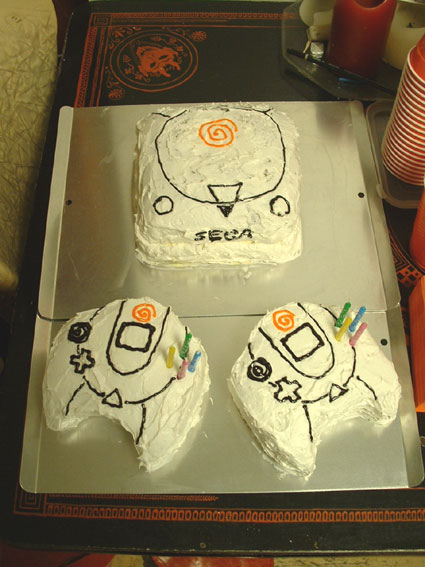
My ode to the Dreamcast


When I was a young lad, I remember my brother and I went to this mystical place called "Blockbuster", along with a few other local rental places (does anyone remember when grocery stores had their own video stores in them?) to pick up these amazing arcade ports on NES, SNES, and Genesis. I'd sit there for hours in front of the TV playing these perfect ports of games like Street Fighter 2, NBA Jam, Joe and Mac, and tons of others. At the time, I thought nothing could ever get any better than that. You could practically play authentic renditions of the same games you would normally have to plop quarter after quarter into in your own home! Sure, maybe the graphics weren't quite as polished, they might have altered some of the sounds, but the core experience was the same! How could it ever get any better?


Things started to change once the move to CD-based consoles started. When the Sony Playstation launched, instead of playing these compressed arcade games, we were getting closer to replicating that very same experience without having to sacrifice nearly as much, thanks to the superior hardware and the increased storage capacity on CD's. Unfortunately, as with most changes in technology, there was a trade-off: insane load times. Mortal Kombat 3 on Genesis was the first time I really noticed how much less crisp its sound was compared to the SNES, along with the fact that the color pallet seemed lacking. The SNES version seemed to look closer but still lacked that definition that made it stand out in arcade. The PS1 port, however, looked and sounded JUST like its big brother. Enter the trade-off: due to the laser having to read data off the disc, whenever Shang Tsung morphed, the game would freeze for a few seconds as it loaded the new characters moveset, which kind of ruined the whole experience, not to mention the loading time between fights. As time went on, the Playstation would become the next home for arcade ports, but we were always forced to just deal with the loading. All of that changed on 9/9/99.


When the Dreamcast finally hit, we saw a significant difference between what had been available during the 32-bit era (Saturn and Playstation) in terms of graphics, sound, and the core gameplay experience. While previous consoles had to sacrifice something, Dreamcast benefited from being constructed on the same basic hardware as what was then available in arcades. This meant that everything you saw at the arcade was finally playable at home with no losses, going so far as to throw in tons of extra modes (Street Fighter Alpha 3 says "Hi"), allowing you to refine your skills at home without having to take frame rate or input differences into account.


As previously mentioned, this was not the Dreamcast's only strength. It definitely makes it easy to go back into if you feel like playing Capcom vs SNK 2 or Soul Calibur, but there were tons of amazing games that were exclusive to it that still hold up well today. Jet Set Radio is still a landmark title thanks to its introduction of the cel-shaded art style that games use to this day. Shenmue can be blamed for the origin of so many QTE events in games for years to come, even going so far as to be the primary control element in this years hit, Heavy Rain. While online console gaming technically existed years before thanks to the xband, Phantasy Star Online is the title people look back at and remember how excellent the netcode was, or that crazy night they jumped on to trade items with some guy from the other side of the world. With the creation of the 2k sports games, it felt like Madden and NBA Live had some serious competition, forcing them to seriously consider what their strategy was. Sure, there was NFL Xtreme, Game Day, NBA Shootout, and other franchises that tried, but none ever managed to really get the experience as refined as NFL and NBA 2k did, which also looked leaps and bounds better than anything we'd seen before. Last, but definitely not least, who can possibly forget their first time seeing the Ready 2 Rumble commercial?


I could go on and on forever about how amazing the Dreamcast was and still is, and there might be future posts nailing down specific experiences I had with the amazing, but for now, I'd like to bring this to a close. The Dreamcast is still my first choice for amazing 4 player split screen games and loading up amazing arcade ports, and while the PS2 is a close second, I really feel that this was the niche Sega carved out for itself in the hearts of gamers everywhere. The next time you hear that ridiculously loud beeping sound the VMUs made when starting up or hear about a new Cel Shaded game, or even when you're cursing out a game because of that damn QTE you missed, think of the Dreamcast and pour one out for Sega. Better yet, track one down if you don't already have one, get some friends, some controllers, and bask in the glory of one of the finest consoles of all time.

Friday, April 30, 2010

Uncharted: Drake's Fortune Review


I've owned a copy of Uncharted 2 since shortly after it came out and haven't even touched it yet, although I spent extensive time with the multiplayer betas. Even though I've heard so many great things about how Uncharted 2 pushes the possibilities of narrative and character development, I felt I'd be doing myself a disservice by not touching the original Uncharted first. After finishing Uncharted 1, I would like to say that I'm totally ready to move on to the next game to see where this goes, and as a sort of goodbye to the original, I'm writing this review while my thoughts are untainted.

Graphics - 8/10

For a game that came out in 2007, this is still one of the most impressive PS3 games I've seen. While some people have dubbed Uncharted as "Dude Raider" or "Larry Croft", it has a lot more in common with Indiana Jones than Tomb Raider. The way the scenes transition to cutscenes, and then the in-game cinematics all combine to create an incredibly beautiful game. While some games might give you a lush jungle and fail at creating any other locations, Uncharted looks phenomenal at every single location you end up in. The high quality graphics don't just stop with the environments either; all of the models, while not as realistic as something like Heavy Rain, their animations along with the attention to detail (Drake's Half Tuck comes to mind...) help to make these some of the most life-like characters you'll ever encounter in a game. Unfortunately, even though all of the models and environments look great, it's a bit of a bummer that eventually, you start getting into firefights (which have some amazing explosions, by the way) with a lot of the same enemy models, which kind of ruins things a bit, but it's understandable. If every NPC had been completely original, who knows how long it would have taken for this to come out!


Gameplay - 7/10

Uncharted's weakest area might be in its techniques used to build tension. Adventuring through the amazing locales, taking in the sights, even the platforming and shooting are all incredibly well done. The controls feel tight the entire time, allowing you to go to whatever cover you need to, pop a few headshots, then move somewhere else. So if the core mechanics are as good as I say they are, how is it possible that this section gets a 7/10? First issue is the problem with how they set up certain battles. When you're walking through twisty tunnels in a cave and suddenly come to a big clearing with randomly strewn about boulders and pillars, you'll start to realize that this means there are going to be dudes pouring in from everywhere. It doesn't matter where it is, this always happens, and during these encounters, you tend to die a lot until you figure out exactly where that rocket toting soldier is, where the snipers are, and when the enemies that keep punching you to death are spawning from (tip: it's probably behind you somewhere). Also, the last few hours of gameplay introduce a completely different enemy, and while the change starts off as being completely welcome, it quickly grows trite when you realize it's essentially forcing itself to become a straight up action game, which isn't the best path for this type of action/adventure game and brings focus to the respawning enemies + arena formula that plagues the whole game.

Sound - 9/10

I don't think I've played any other game where the dialogue between characters comes off as natural as it does here. Every time I've heard someone mention either Uncharted, they immediately start talking about how much the liked the characters, ranging from the archetypes they represented to simple character design. The presentation of archetypes are mostly done through their dialogue and how well the actors did, elevating the scriptwriting from lines on a paper to sounding like believable responses for any of the characters during these harrowing situations. Fortunately, the voice acting isn't the sounds only strength; the soundtrack is incredibly fitting. In addition to every song being fantastically composed to create that treasure-hunting atmosphere, all of the songs are used at fantastic times. Last but not least, the weapon sounds are all distinguishable from each other during gunfights, allowing you to audibly tell who you should be avoiding or precisely where that guy with a sniper rifle is firing down at you from.


Overall - 8/10

While the whole experience is fantastic, it's a bit disappointing that some of the gameplay mechanics really do drag what would otherwise be a fantastic experience. To this day, all these years later, I've yet to come across more believable characters, and while the graphics aren't the best any more, thanks to titles like Final Fantasy XIII and Heavy Rain, they are easily in the upper echelon of what's been presented on PS3. Despite its flaws, Uncharted 1 is a title I highly recommend every PS3 owner at least try out and any collector needs in their library.

Monday, April 19, 2010

God of War III Review


I was going to attempt to hold off on writing this review until I finished the 14 other reviews I've had pending since last October, but the more I think about my experiences with God of War 3, the more I realize I need to let it all out. First and foremost, I would like to say that I was a huge fan of the first game, skipped the second, played the PSP one which made me hate the entire series, and I'm back again giving 3 a chance. This was the one release this year that was guaranteed to be at least a good, worth owning PS3 title, especially after enduring all of the hype it was getting. What were my impressions and most importantly, could it possibly rekindle the flame that Chains of Olympus urinated out then shoved into a vat of steaming elephant dung for me? Read on to find out.

Graphics - 8/10

I think it goes without saying that as of right now, the graphical powerhouse titles on PS3 are Killzone 2, Heavy Rain, and Uncharted 2 (leave a comment if I missed one). While I can't comment on the last one since I've barely played the single player in it, I can safely say that God of War 3 does a stellar job of pushing the cell processor just as hard if not harder than the previously mentioned titles, and all without a hint of slowdown. GOW3 continues to emphasize the scale of Kratos vs. the insurmountable odds he faces at every turn, from minotaurs to titans. While the previous games looked particularly well considering when they came out, God of War 3 manages to keep everything running at a smooth 60 fps the entire time while presenting almost every story event using the in-game graphics engine instead of prerendered cutscenes, which is just about the only time you get to see how impressive the models look up close. All of the models sport incredible detail, even down to the way that sash around Kratos' waist moves. So why is this only an 8/10? Unfortunately, there are moments in the action based gameplay where when the camera zooms in and you get to see the texture work on the regular geometry and you realize that the only reason the world looks so detailed is because those textures were clearly meant to be seen from a distance and lose that sharpness as you get closer. Another downside is that there are also a lot of enemies and locations that have been (or at least look) recycled from previous games and while they have been increased in detail, it would have been nice to see completely original enemies or new designs for the pre-existing ones. Fortunately, some of the bosses you come across (the first comes to mind) look spectacular and there's a rather clever 300-styled cutscene that happens early in the game.


Gameplay - 7/10

I managed to not come close to touching the demo since I had a really weird feeling that God of War 3, at its core mechanics, would be more of the same. I'm a bit conflicted on how I feel about the end result. After unlocking more weapons, the ability to switch them on the fly mid-combo comes as a welcome change of pace. Despite this innovation for the series, most of the time you'll end up just hammering out the same button combos that you've been doing since the first title. It's nice to be able to pick up the controller and instantly know things, such as how the right stick has to be dodge, but it makes me wish that there had been more originality overall instead of falling back to the if-it-ain't-broke-don't-fix-it end result that we're left with. When you consider that Heavy Rain came out a few weeks before GoW3 and completely changed how most people feel about character interaction and presenting you with compelling QTE's, it's almost disappointing to see almost all of the events in GoW3 resort to hammering on a single button. At it's best, the game slows down long enough to let you see the button presses and make sure you hit the right ones or offers a cinematic camera angle from the enemies perspective, but the competition seems like it's moved way beyond the basic mechanics presented here.

Sound - 8/10

Since I've relocated to an apartment that I'm sharing with someone else, I feel like I shorthanded myself by not having experienced this game in 5.1 glory. Fortunately, I did have a set of Turtle Beach X1's handy, and while they don't simulate surround sound or anything dramatic, they do have great bass reception. When you get to hear the booming voice of Hades, it really made me appreciate how much effort went into the voice acting. Even Kratos' trademark anger is present, if a bit trite. The score continues to be phenomenal, just as it has been in the previous games, while fitting in appropriately to each section of the game, easily succeeding in further immersing the player into the insanity of the situations at hand. While all of the voice acting is phenomenal, it's a shame that the lines written for the characters have to be so weak at times. "WHAT TREACHERY IS THIS?!" Really now?! At least the line was delivered well in spite of its content!


Overall - 8/10

God of War 3 did manage to convince me that all hope was not lost for the franchise, even if it's supposed to be the end of a trilogy. While the whole game isn't continuously full of the high notes like the first hour or so, it did make a good job of making me want to see what was around the next corner, more for the experience instead of story. One thing I did forget to mention in the gameplay segment is how infuriating the double jump system is. While it is a total bummer to survive a tough fight only to fail at jumping a tiny pit because the timing is so strange for it, it still doesn't completely drag the experience down. I almost feel like if the studio had been tasked with creating a new title from a fresh IP, they might have put more effort into overcoming some of the traps they fell into (Kratos is still one dimensional, the double jump issue, and an incredibly predictable story). God of War 3 this still succeeds in being one of the best action games of this type on the PS3 and a must play for anyone owning the console. If you're a fan of action games or the series, this is easy to recommend as a purchase. If you're new to the franchise, you might want to just rent this one or pick up the God of War Collection instead. While it is a fitting end to a trilogy, it's also incredibly formulaic which keeps it from scoring higher.

Friday, December 4, 2009

Beatmania US Review


With DJ Hero just recently coming out, I feel like it's time to go ahead and give credit where it's due. That's right, ladies and gents: it's time for me to finally review Beatmania.

GAMEPLAY - 7/10

Beatmania (US) is actually based on the 9th game in the popular and long running Beatmania IIDX arcade series, which is also a sort of reimagining of the original Beatmania series. The gameplay consists of buttons falling from the top of the screen to the bottom, with the player having to press the corresponding button as soon as it reaches the bottom. While the formula doesn't sound to different from any other music game out there, its real charm comes from the sheer difficulty and learning curve. While most games tend to make concessions towards introducing players to the game, then getting progressively harder, Beatmania starts you off at the bottom of the staircase, shows you the first two steps, then smashes the rest of them with a gigantic hammer, lights it on fire, then lines the rubble with nails dipped in poison and asks you to reach the top. Part of the challenge comes from the fact that the samples you're playing usually involve tapping rhythms and melody at the same time, while managing the turn table. This might not be that big of an issue, but it requires you to have at least 85% of the notes played correctly through the entire song, with your percentage becoming a life bar. Once you reach the upper threshold, any missed notes will slowly pull it down. Basically, this boils down to you possibly being great at a song and failing because of the last 5 seconds of the song if you don't know the ending, which can lead to a lot of frustration. If anyone out there is a fan of the previous (or later) releases, the US version is a perfect port in terms of gameplay, along with giving you a chance to get an official Beatmania controller.


GRAPHICS - 4/10

While the US music games tend to focus on creating unique interfaces, characters or customization, Beatmania focuses more on a minimal graphical style that makes it feel more like you're learning some bizarre language instead of playing a game. Most of the time, you'll be staring at a plain black background with white, blue, and red keys flying down screen. If you can peel your eyes away, there's a video playing on the side, but that's about it as far as in-game visuals are concerned. The music select screen is nice, but there's really not too much that sets up any sort of atmosphere other than music-game-in-corner-of-arcade, which doesn't really cut it for console music games anymore.

SOUND - 7/10

If you're one of those people that criticizes DJ Hero for not having enough trance/techno, the soundtrack here might float your boat a bit more. While there's still a bit of the traditional eurobeat stuff that plagues so many japanese music games, you also get some of the more original songs from the franchise (Bad Boy Bass? Yes plz). In addition to that, you get a few original songs along with the required American tracks, which includes a decent remix of Britney Spears' Toxic, Funkytown, etc. In total, you've got 58 songs, some exclusive to Beatmania, the others in IIDX, and a few more that are selectable in both modes once you unlock them.


OVERALL - 7/10

For anyone that's always loved Beatmania or is a huge fan of music games, this is well worth at least trying out, however the steep difficulty curve and song list might alienate some players. If you persevere and manage to pass some of those more tough songs and possibly even AA them, you'll get one of those rare moments where you might jump out of your chair or away from the TV in excitement. This is also probably one of the easiest way to score an affordable and decent Beatmania controller for long time fans, but it's a bit hard to locate copies of the game since it didn't sell too well in the US. While BM US is easily a must buy for Beatmania fans, people that are hardcore fans of American music games might want to approach this one with caution and everyone else might want to look at videos to see if it looks interesting before even trying it out.

Monday, November 16, 2009

Wii Sports Resort review


It's nice to know the first Wii game reviewed here is a pretty good one! The original Wii Sports was one of those games that really helped to showcase the features of the Wii and was a primary reason so many people purchased the console, but it was clear after a few sessions that it was pretty much just a glorified tech demo. Is it possible that Wii Sports Resort presents the player with more of the same, or does it bring anything new to the table? How does the Motion Plus affect gameplay? Why are there so many questions here? Read on to find out!

Graphics - 7/10

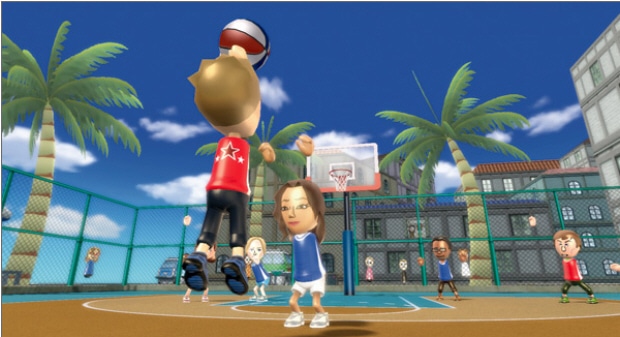
Annnnnnnnnd it looks like we're off to a bad start. Unfortunately since Wii Sports came out, there have been a lot prettier games produced without having to add the "good for a Wii game" qualifier after it. While the graphics in Wii Sports Resort do have a certain charm to them, it's mostly just a few small enhancements to the same visual style from the original game. Your characters are all Miis, which is cool and all, but they aren't exactly the most detailed things out there. I know it's nitpicking, but I feel like things might have been a bit better had they pushed this into a slightly more unique art style. To be fair, the new levels feel a lot more organic with the miis walking around in the background or cheering you on, or even subtle things like the ducks swimming in the lake while you're canoeing. Most importantly, even though it might not be pushing any graphical boundaries, it still feels like it captures that classic Nintendo feel that nearly all of their first party games have.


Gameplay - 9/10

The first game did a phenomenal job of convincing people to spend 250$ on an experience they couldn't get anywhere else, but unfortunately didn't keep anyone really coming back for more past the first week. Wii Sports Resort relieves all of those issues by offering 12 different sports, each with tons of unlockable bonuses that change up the gameplay (frisbee golf, speed slice, 3v3 basketball, etc) with the core gameplay of most of the modes being incredibly fun and accurate to their real life counterparts. While there's tons of content for all 12 games, the typical reaction from people is to love some of them, like a few more, then have 1 or 2 that they utterly despise. The other small issue is that while most of the games take full advantage of the motion plus, a few of them feel like they could have been done without it, which is a shame since the game requires each player to have the accessory attached during multiplayer. I'm not sure if you want to at the package as a full game with a pack-in that you might end up needing in the future or a 40$ accessory with a 10$ game, but this time there's definitely more than enough on the game side to keep you coming back for a long time.

Sound - 6/10

While the graphics get by because of the sheer charm, the sound in WSR is actually harder to excuse. On one hand, you have an incredibly catchy theme with some decent sound effects that you'll hear from time to time, but you'll quickly realize that those few sounds are what you're going to be hearing every single time you play. It would have been nice if they gave you an option to use a custom soundtrack or maybe had a few classic Nintendo game songs just to help things stay fresh a bit longer. While most games feature overly cinematic scores, Wii Sports Resort skips all of that and uses some incredibly simple, yet memorable songs that you might actually find yourself humming while not playing the game for the first time in years.


Overall - 8/10

If you're a Wii owner or considering purchasing one soon thanks to the new price drop, WSR definitely deserves a place in your library. Not only does it blow the original out of the water, but the enhancements to the returning games gives you tons to keep coming back for. If anyone is looking for a title to show off the graphical prowess of the Wii, you might want to shy away from using this, but if you're looking for one of the most flat-out fun experiences this year, look no further than Wii Sports Resort.

Sunday, November 15, 2009

Blueberry Garden quick review


Winner of the Seamus McNally indie gaming prize has been out for quite some time, and has all sorts of mixed opinions. The one thing I think everyone can say that has played it is that it's not really much of a game in the traditional sense. While there is an objective, it's not exactly...clear at the beginning of the game, or even once you start doing things. Honestly, Blueberry Garden is more of an experience than anything else. People thinking of picking this up based on the awards or the praise it had been getting pre-release might want to check out the demo first to see if they enjoy it, but even then, it IS only 5$ so whatever opinion you walk away with, at least you won't be broke. Some people have called it a garden simulator with an abstract ending, others have mentioned how some of the things laying around in the world almost offer a perspective on environmentalism, but if there is one positive thing I can say, it's that the piano score is incredibly well done. The controls get the job done, even if you don't know exactly what the job is. On the other hand, due to poor computer optimization and no post-release updates, it's even harder to recommend since there's no way to make the game run better and its not clear whether or not your system will be able to play it smoothly. I'm playing on a 2.5gb RAM + Radeon 4670 HD pc and it runs the game at about 10-15 frames per second while all of the laptops in the house which have 256mb integrated graphics cards seem to run it flawlessly and I can't figure out why. So...what does all of this mean? There's probably 2-3 people out there that might ever read this and decide that Blueberry Garden is their ideal game, and while it IS a unique concept, it's definitely not for everyone. It's honestly not even recommendable to fans of abstract or indie games in general because of how terribly it runs. For people waiting for a score, here it goes:


OVERALL - 4/10

It's almost unplayable and even though you might completely go beyond the requirements, there's no guarantee that it will run smoothly. Maybe if there's ever some sort of fix, this will do better, but I've got to say you'd be fine watching a youtube video of this instead of playing it yourself. On the plus side, it's got a great soundtrack and a pretty cool looking art style.

Saturday, November 7, 2009

DJ Hero Review


It's hard to deny that Activision has essentially become the evil empire that Electronic Arts had been in the past. While in the past, they were known for rehashed Tony Hawk games and quick movie cash-ins, they also launched the (at it's release) innovative Guitar Hero franchise. While Guitar Freaks existed before it, GH was the first title to actually make it to US consoles with a music list that appealed to American audiences. While the first one was a critical success, it wasn't until the second that it became certain that Activision had managed to cement its place in music game history and inspired Rock Band and Konami to actually release its long-running Beatmania franchise here. Unfortunately, they pulled an Activision and like the THPS franchise before it, the Hero name seemed to appear on every single platform (DS?!) with several releases coming each year (4 being released in 2008). With that and Rock Band constantly competing against each others release dates, many people have grown tired of anything with the name attached to it and are slowly losing any dwindling interest in the music game genre. The most recent release with the Hero name attached to it is DJ Hero, which sounds like a quick attempt to cash in on the franchise name or emulate Beatmania. Does it actually do anything new? Is it worth the 120$? Read on to find out.


GAMEPLAY - 9/10

From the moment its name was announced, it was painfully obvious that this was another cheap move from the publisher to make as much money without doing anything new yet again. At least, that was everyone's expectation. Readers, I would like to take this time to inform you that despite the name, this is probably one of the best music games I've ever played. While the core gameplay is completely reminiscent of of the notes-streaming-down-a-highway we've all grown accustomed to, the new mechanics and controller set this apart from anything else you've ever experienced. The first assumption when touching the controller is that the buttons on the turn table are going to ruin the game, or at least detract from the feeling of actually mixing the tracks, but it adds another layer of depth while also kind of helping you to get a grip during some of those extra tricky scratches.
Instead of just forcing the player to dive in and get started, the game only has easy, medium, and hard opened from the start, and forces you to go through the tutorial first to make sure you have a basic understanding of the mechanics before you get yourself overwhelmed. After that, you've got a playlist at your disposal until you quickly start unlocking more and more sets, some with hidden songs that are only playable after getting at least 3 stars on everything else in that set. Along with the "Hero" title attached to the game, the lack of failing in the game was also heavily criticized before the game shipped, but as you progress, you'll realize about halfway through unlocking that just barely passing songs is NOT enough to unlock at least 10 of the playlists, which get progressively harder and still requiring you to get a decent number of stars to unlock even more things, which gives you something to work towards and rewards players that stick with the game long enough to start improving their scores.
The peripheral itself seems to garner people that love it and people that think its terrible. For the people that think it's a horrible piece of hardware, remember that you don't have to slide the crossfader directly back into the middle for it to count as being centered, so that argument goes away as you start playing more and more, and the grill on the outer edge of the turn table gives you extra grip for some of the quick scratches. The other major complaint I hear fairly often is that the game doesn't let you mix songs how you want to, and to that camp of people, I would like to remind you that you're playing a video game, not an actual turntable.
For those looking for multiplayer options, this feels like it was constructed as more of a single player experience (especially with the lofty price), but a few of the songs allow you to play on a turn table while a friend plays the guitar track, or even head to head battles with two turn tables. I'm not..sure..why you'd want to do that since there's all of the rewinds and samples you can throw in when you play alone, but...to each their own, I guess.

GRAPHICS - 7/10

This section will be kept as brief as possible since the main features of the game are its soundtrack and gameplay. The graphics work. That pretty much sums up what you expect from a music game anyway, right? While you can't create your own character, there's probably about 15-20 (including actual djs) that you'll have after you unlock all of them, with plenty of alternate costumes, custom decks/headphones, and venues that you earn the more you play, which helps with the variety. At the same time, all of the created male dj's feel ridiculous, especially when placed in the realistic looking locales (such as the mansion), or actual DJs included in the game. The crowds also seem to have this weird 2D or simplified 3D rendering that gives the illusion of tons of people gathered around watching you, but then you realize the crowd is constructed of like..3 models that are incredibly jaggy whenever you get a real view of them, but works since you spend most of your time staring at the notes streaming down the screen anyway. The noteskins and everything gameplay related work just as expected, which is to say sort of flashy to give it a bit more flare than the lines from Beatmania, but don't distract you from the overall gameplay experience. Despite my criticisms for the way the crowd looks and some of the bizarre male characters, there's still some sort of atmosphere of almost being on a stage in front of tons of people because of crazy lighting effects and the sheer size and variety of venues.


SOUND - 8/10

I'm not going to lie: the soundtrack in DJ Hero isn't going to please everyones tastes. At the same time, if you're upset that Metallica or Johnny Cash isn't in DJ Hero, you might have bigger problems than worrying about the music selection that IS available. On the disc, you've already got 93 mixes to play through, and while there might be a few weak mixes, you still have probably more than twice as many songs than what was available in Rock Band 1. That's an insane number of songs to be included on the disc in a music game. While some of the songs seem to get reused pretty frequently, the mixes still sound amazing if you can open your mind to the entire mashup genre. After you accept the fact that you're scratching at places the person that mixed it would scratch and you get to hear the full thing, there's tons of moments where you'll realize that these two songs you didn't think could work together mesh perfectly. Who would have ever thought MC Hammer and Vanilla Ice were possible to unite without the entire world being reverted to the 90's?


OVERALL - 8/10

For music game fans, regardless of your musical tastes, DJ Hero is an absolute must-play. For everyone else, you'll probably have tons of fun if you can accept the song list, and it's a completely different feel from anything you've ever played with the heavy emphasis on the scratching and crossfading, not to mention the ridiculous songs towards the latter half of expert that are incredibly rewarding once you start getting higher scores. Thanks to the tons of things that are left to unlock even after you get all of the songs, there's TONS of replayability in DJ Hero. The multiplayer feels kind of forgettable, but for those of you who want to try it out, there's online versus even though there's almost no one playing it. The biggest reason this didn't get a 9 however, is that even though I think this is probably one of the best music games I've ever played, there's the fact that it costs 120$, which makes it hard to recommend to anyone that's not a hardcore music game player. It's a shame because this is definitely one of those games I think everyone should at least give a chance, but thanks to everything else that's coming out or already came out this year, you've probably got tons of things to do to pass the time until the price inevitably goes down after the holiday season.

Friday, October 23, 2009

Lost Planet 2 Multiplayer Demo Impressions


I realize this quick-look at the upcoming Capcom action game is probably 2 months late at this point, but better late then never, I always say! Lost Planet 2 is clearly the follow-up to the early 2007 sleeper hit, which took place on a distant planet that humanity was looking to colonize, yet had to compete against tons of space pirates and the native life forms, not to mention the incredibly harsh environment. The core gameplay was almost a blending of old-school mechanics with cutting-edge graphics and newer 3rd person shooting action, mostly set in frozen environments, but with volcanoes, abandoned facilities, and caves thrown in for variety. While it did fairly well, it never caught on well enough with the mainstream to warrant a sequel in my opinion which is why it's so shocking to find out that not only is Capcom working on a sequel, but they're throwing in more of the gigantic boss fights, 4 player co-op, and even more varied locales thanks to the aftermath of the original game.


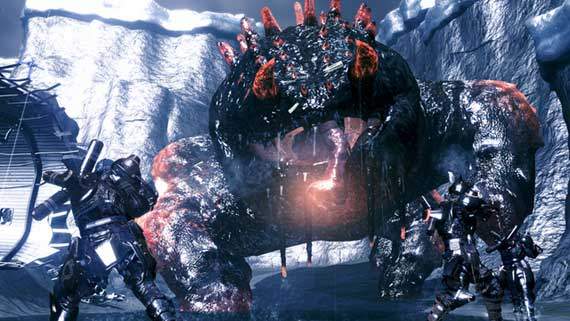
The new demo for Lost Planet 2 highlights the 4 player co-op while showcasing one of the gigantic new bosses in a familiar frozen environment for fans of the original. With all the co-op functionality included in most games at this point, it would be fairly easy to assume that this is just another quick cash-in, but it's well worth sticking around to find out just how crazy and useful having 3 other teammates there with you are. The boss still has the same gigantic glowing orange weak spot that was in the first game, but it's worth pointing out that he completely towers over you and the other players. As everyone quickly scrambles around, searching for their weapon of choice, activating spawn points, or just trying to find a good spot to begin the beat down, you'll sooner or later learn that the size of the boss isn't one of those things that just intended to intimidate you. With a well timed approach while the enemy is crouching down, you can actually manage to get ingested inside of the creature and fight off tons of enemies as you work your way through its digestive system until you eventually come across the heart of the beast and have a few moments to attack it through its ribcage until you're inevitably forced out the butt of the thing, then can rejoin your teammates outside or attempt to start the cycle all over again.


While this was probably one of the coolest boss fights I've played in a while, it's worth noting that if you have a team of people that aren't very good at the game or don't want to help out, you'll probably die off really quickly, making this the ideal game to play with people that you actually game with on a regular basis that you know you can depend on to save yourself a lot of frustration. After the end of the boss fight, you've got a few seconds to run around and gather up points and ammo before it shows you with a ranking screen and exits back out to the main menu. If they can keep increasing the creativity of the boss fights throughout the game and the co-op includes...you know...levels and is NOT just a boss rush, along with bringing back the addictive competitive multiplayer from the original, this is totally a day one purchase for me. On the other hand, if you're not a fan of trying to find gigantic glowing weak spots, or you're looking for a more narrative driven game, it might be best to try out this demo first or wait for a review after the full game comes out, since the first one definitely wasn't for everyone and the demo feels the same way.

Wednesday, September 16, 2009

Katamari Forever demo impressions


Originally, I had planned on writing this a few months ago after some hands on time with the Japanese demo, but felt I should wait. So here we are! The US demo has finally come out on the Playstation Network and the verdict? It's pretty much the same thing you grown to love or hate. While the gameplay changes are minor (using the six-axis to jump...sort of.) there's a bit more variety in the missions, not to mention you can change characters now, and it sounds like you might be able to unlock a few of them in game if you manage to roll them up. While in the previous games, the King of all Cosmos would sort of taunt you or maybe give you an backhanded compliment for doing a bad or great job, there's an actual grading system in place, giving you more replayability if you're the kind of person that's into getting and improving high scores. The controls aside from the jump are the exact same and work as great as they always have. The two most significant changes aside from the grading system and mission variety (one mission has you absorbing water then rolling over sand to expose the lush environment underneath) is the new art style. It's not exactly cel-shaded, but it does have a cartoon-like feel, which is appropriate when you think about how outlandish what you're doing is in these games anyway. The soundtrack is great as always, with the demo featuring two songs that I don't remember from any of the other versions, but still are a variation on the unforgettable Katamari theme. Lastly, I would like to say that this is the first version of the game that I've played where once you start exceeding your goals and become huge, there's no drop in the frame rate or graphical quality. Then again, the demo does only offer one scenario where you're getting bigger, and it takes place indoors so that might not be the case for outdoor environments. As a Katamari fan, I'm looking forward to playing the full version whenever it comes out, but if you've never liked the series before, it seems like this will do little to convert you.

Darkest of Days demo impressions


Darkest of Days is one of those games that I know is going to be overlooked by tons of people that probably would have enjoyed, yet won't experience due to negative feedback or the outlandish premise. Keep in mind that all of the following statements are based on the demo, so it's possible there's some even more crazy plot twist that ruins the game/gameplay later in, but if you're trying to play through this for the story, you're probably missing the point. From what I gathered from the demo, you start off as a soldier during Custer’s Last Stand, tasked with simply surviving against increasingly more and more Native Americans. Unfortunately, you get shot and end up firing into the masses on a CoD4 last stand mode, and when everyone around you finally dies, a time bubble pops open and out pops some futuristic looking soldier, telling you that they need you to come back with them. Enter Darkest of Days; Once you're teleported to the future, you're given a brief explanation of why you're going back through different periods in time, which is usually something along the lines of "THIS GUY IS IN THE WRONG SPOT! GO BACK AND FIND AND PROTECT THEM WHILE SHOOTING REVOLUTIONARY WAR SOLDIERS WITH A ROCKET LAUNCHER LOL" It's not in exactly those words, but I think you get the point. After a brief training session, you're warped back in time again, with more control over the outcome.


The gameplay itself is really reminiscent of things like Serious Sam or Painkiller, or possibly even Left 4 Dead since it's mostly you moving to an area, holding it, then moving on to another. To keep things a bit more fresh from just saving one guy while killing everyone else, there are random enemies that have a blue aura surrounding them, which means that you're supposed to score a non-lethal take down on them, which is easily done by shooting them a few times in the legs or arms. It's not much of a change from the formula, but it is a welcome addition. While everyone you're fighting is using weapons from the respective time period, it doesn't mean that you're necessarily going to be blowing through them. Judging from the demo, when you enter an area, you're given 2 weapons from that time, which in this case meant an old school rifle that you had to reload by packing gunpowder and dropping in ammunition and a faster semi-automatic rifle that's a bit weaker in terms of pure firepower, but later you‘re handed a weapon to turn the tides in your favor. While it's not exactly complicated, the well done engine, mechanics, and controls do provide a lot of mindless fun. It's nice to play newer games that don't try to have elaborate cover systems or RPG elements from time to time.

Graphically speaking, I'm a bit torn. On one hand, the game really does a great job of modeling the chaotic feeling of organized battles during that moment since firing a manual reload rifle leads to tons of smoke filling up the air, which clouds your field of vision, but those same effects are largely what cause the frame rate to drop down from 30-40 to somewhere in the teens for a few seconds. The character designs are pretty well done, and while their talking animations aren't that great, it still looks good enough to not break you out of the battle while getting shot at. The only real downside I've noticed is that the color palate seems to reflect what you have a mental image of what a battle would have looked like at that time period, and not an actual realistic environment.


The sound effects are ...not the greatest strength of the game, but they aren't really terrible either. Considering the game is coming from a smaller studio, it's not that bad, but I almost get the feeling that the voice actors in particular are trying to feed on stereotypes to help you identify where they're coming from. I would like to point out how bizarre it is that no one at all ever mentions how you're using an incredibly overpowered weapons, but hey, what can you do?

Overall, I'm really impressed with the simple fun that's here, but I’d have a hard time recommending it to anyone that’s not a fan of more arcade style shooters. While there isn't a point mechanic or anything that I'm aware of, it's not exactly the deepest game out there. Then again, you've got tons of those coming out between Halo: ODST, Call of Duty: Modern Warfare 2 and several other shooters coming out from this year or in early 2010. Why not give this one at least a chance as a demo or if you see it for a lower price. Unfortunately, I've heard some bad things about the console version, so if possible, go for the PC one (29.99 on Steam), provided you can run it. While I have your attention, I've got to say that this feels like the perfect engine to mod on since you've got all these weapons already demonstrated in game.

Wednesday, September 9, 2009

Dreamcast 10th anniversary spectacular!


I know this is a bit late, but it's still the 9th, so happy 10th anniversary, Dreamcast! This list is just a list of ten things that I feel made the Dreamcast special. It's not the ONLY things, but these were the first ten that popped into my mind. If you have anything to add, feel free to leave a comment!

1. The 128 bit Graphics.


I still have that scene of Sonic racing down a dock as a killer whale crashes through behind you against the blue sky and crashing waves in Sonic Adventure 1. While the N64 had been a 64 bit system, most of the games didn't feel like nearly as big of a leap as what happened with the launch of the Dreamcast. While Sonic Adventure 1's dolphin scene and maybe the commercial for Ready 2 Rumble are two of the most memorable launch experiences, who can possibly forget the first time you saw Soul Calibur? Say what you will about the franchise, SC1 on DC had some amazing effects. Then you've got Jet Grind Radio, the amazing 2d art in Street Fighter 3: 3rd Strike, completely trippy visuals like Rez, and countless other games that showed you that, at least for a while, Sega did what Sony and Nintendon't.

2. Peripherals


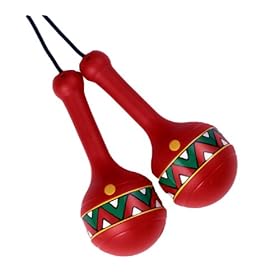
While there weren't actually too many peripherals for DC, the ones that were actually helped out people a lot. You've got the infamous Rez vibration controller, but there's also great things like the light guns, and arcade stick for creating an authentic arcade experience at home. If you were a fan of pc games, specifically Quake 3, you could grab the keyboard and mouse for the dreamcast, allowing you to play a console FPS exactly how you always wanted to, which was great for online matches against other PC players (cross platform play ftw!). The keyboard attachment was also later used to help players all over the world talk to each other in PSO and was infinitely more useful than the on screen keyboard or quick commands, along with later being used in Typing of the Dead. A microphone had been released later to use with Seaman, which was useful, but never really managed to make it beyond gimmick status. Either way, you've still got stuff like the Samba De Amigo maracas and that definitely gave plenty of people a lot of enjoyment.

3. Cel Shading and Jet Grind Radio.


What probably would have been overlooked as just another extreme sports game, the art style really made this game stand out amongst the Tony Hawks and Dave Mirras, which allowed people to realize that this was actually about graffiti, helping to spread word of your crew while surviving against the oppressive military and other gangs. If I ever see anyone take down a helicopter in real life with a can of spray paint...I think I'll have finally seen everything.

4. PSO/Online Play


Managing to waste entire weekends playing Phantasy Star Online for free through Sega's 56k modem is simply unforgetable. I'm STILL not completely sure how they managed to keep everything running so smooth while everyone was using telephone lines to dial in, but WOW, what an amazing experience! I'm not certain that Phantasy Star Online Blue Burst is still online for the pc, but if you haven't played this game yet and are a fan of Diablo style hack and slash adventures, do yourself a favor and grab it on pc, xbox, dc, or whatever else you can.

5. All of the amazing arcade ports.


From Shmups to Light Gun games, whatever your favorite games were in the arcade in the late 90's, if you wanted to see a 100% faithful port, Dreamcast was the way to go. While this tradition was sort of started with the Saturn, the faster loading times, great dpad, and hardware specs made this an arcade fans dream. When it was finally announced that the Dreamcast was no longer going to be produced, it left everyone a bit uncertain since this also happened during the decline of arcades. Luckily, the torch was passed on to the PS2, but if you're trying to find that perfect port of Marvel Vs Capcom 2 or want to go back and experience the way Ikaruga was meant to be, look no further than the DC.

6. VMUs.


While card based storage would later be phased out with the dawn of the Xbox, both Sony and Sega tried their hand at creating portable memory cards with screens. Unfortunately for Sony, their attempt never caught on and (if I remember correctly) was never officially released in the US. Dreamcast, on the other hand, was launched with their Virtual Memory Unit, a memory card that had a dpad, 2 buttons, ran on one of those...LR3 batteries or whatever, and had a (terrible) speaker built into it. While many games just used the feature to show the name of their game on the screen as you played, there were plenty that actually took advantage of it and several sites that had downloadable games specifically designed for the VMU. To think, it took Logitech until 2005/2006 to produce their G15 keyboard that had a screen with more or less the same functionality!

7. The controller.


I'm not going to lie. The Dreamcast controller, aesthetically speaking, looks pretty frickin' unwieldy. First, you have the 4 candy colored buttons on the right side, two triggers, a big wide space in the middle with a start button at the bottom center and a gap in the face to view the VMU, then a dpad and analog stick. It even sounds awkward describing it. Amazingly, when you put that thing in your hands, it feels perfect, largely thanks to the grips the triggers provided so you could comfortably rest your extra fingers behind it. While issues arose with first person shooters (dual analogs hadn't really been around yet), those hadn't really caught on too well with the console market, so this controller is still perfectly suited for the games available on the console.

8. Sega Sports.


While I'm not a big sports gamer, I really do admire how much the 2k sports games forced EA to actually get better, to this day. Before NFL 2K had come out, it was already accepted that football fans were going to get the new Madden whenever it came out, and maybe give a game like NFL Blitz or NFL Xtreme a shot, but nothing had come close if you were looking for a realistic sports game. Then here comes Sega's first real sports game in ages, NFL 2k, which blew Madden out of the water, while the NBA 2K games slowly gained dominance of EAs NBA Live. With its 128 bit graphics, completely unique play selection screen, and the sheer amount of detail that went into every aspect, it was evident a new and formidable competitor had finally stepped into the ring.

9. That Ready 2 Rumble ad.


THIS LONE AD was what made SO MANY people think games had finally started to really look realistic. While biting fro's was not an actual attack in-game, it was still managed to be a lot of fun to play. Now that I think about it, R2R was the first time I'd had a great time with a boxing game since Super Punch Out. While the gameplay itself was great, the graphics, characters, and commentary by Michael Buffer really helped keep this in the heart of countless Dreamcast fans.

10. The arrival of Shenmue.


Talk about ambitious! Shenmue was originally planned to be a 16 part game that followed Ryo's quest to avenge his father. The first game in the series was one of the most hyped Dreamcast games I can remember. Putting the game in for the first time, you were treated with an epic (for the time) intro that lasted at least 10 minutes. The game took place in Yokosuka, Japan and one of the cool features of the game was that as you hunted down clues to the man that killed your father, there was a day-night cycle with randomly generated weather that was respective of the season in addition to using some of the real weather patterns from that area in real life during that time. While looking back at it now, many people scoff at how "hunting down" a killer boiled down to asking sailors what they knew about "THE THREE BLAAAAADES?!?!", and then repeating the question to the person only to find out they know nothing, there's an actual feel of tension of trying to finish all of these tasks within the hours you have awake. For those that just wanted to enjoy the world, you were free to roam the streets and talk to the many npc's, or maybe hop in the local arcade to play a few games of Space Harrier or Hang On while wasting the rest of your money on the countless toy dispensing machines in your attempt to collect every action figure known to mankind. The only downside to this game was that this is the game most people directly blame for QTE's catching on. Finally, the series was cut short, and even though it had been critically praised, terrible sales prevented Shenmue II from ever making it overseas on the Dreamcast, doomed to stay forever in Europe and Asia, yet somehow managing to get a US Xbox port many years later. It seems like every year, people hold out hope for a Shenmue 3 or something to continue the adventures, but until that day comes, keep crossing your fingers.